
I’ve always believed that to truly understand a place, you must eat your way through it. Not just at restaurants with English menus and TripAdvisor stickers in the window, but in the humble kitchens where traditions are preserved through generations of hands that instinctively know how much flour to add without measuring.
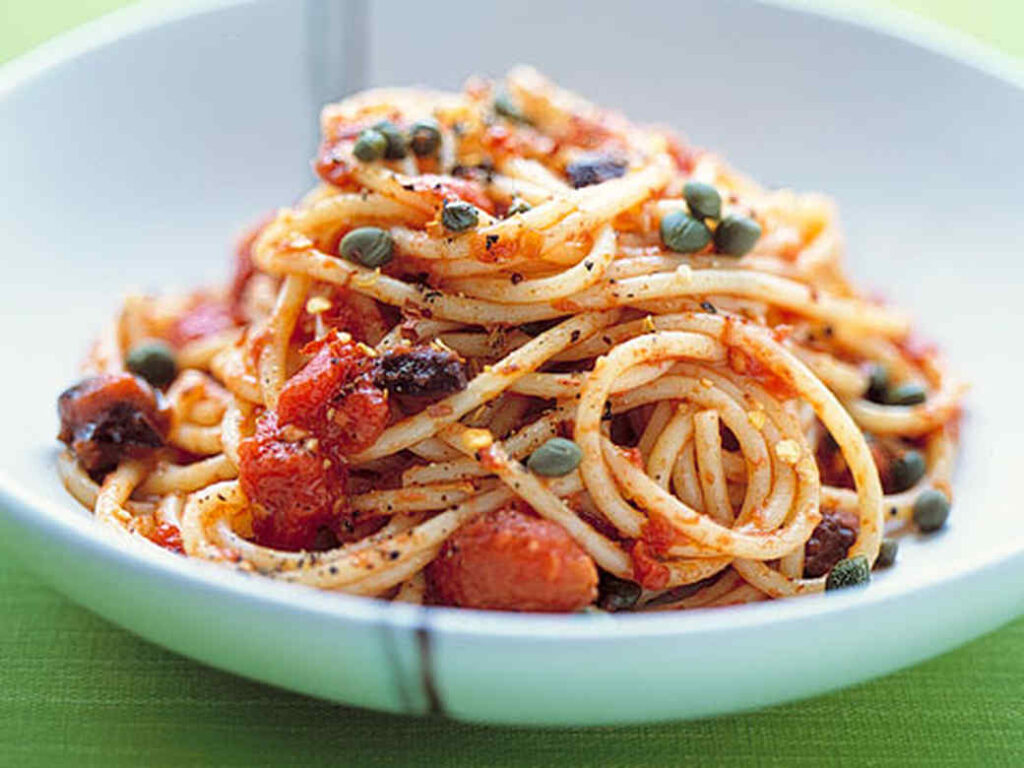
This philosophy led me to spend three weeks last autumn wandering through southern Italy with an unconventional goal: to cook with as many Italian grandmothers as possible.
The Seed of an Idea
The plan was both simple and audacious. I would travel through Calabria, Basilicata, and Puglia—regions often overlooked by tourists racing between Rome, Florence, and Venice—and somehow convince local nonnas to let me into their kitchens.
I spoke embarrassingly basic Italian, had no professional cooking credentials, and had booked only my first night’s accommodation. What I did have was genuine curiosity, respect for culinary traditions, and a small notebook to collect recipes.
Friends called me crazy. “You can’t just knock on doors and ask to cook with strangers,” they insisted. Perhaps they were right, but something told me that food might be the universal language I needed.
First Lessons in Calabria
My journey began in Tropea, a clifftop town in Calabria famous for its sweet red onions and stunning beaches. After checking into a small B&B, I mentioned my mission to the owner, Francesca.
“My mother makes the best cipolle di Tropea ripiene,” she said, referring to the local stuffed onion specialty. “Come tomorrow morning. She will show you.”
The next day, I found myself in a tiny kitchen with 78-year-old Sophia, who spoke no English but communicated perfectly through gestures, facial expressions, and the occasional gentle slap on my wrist when I chopped the parsley incorrectly.
We hollowed out the famous sweet onions, creating delicate cups that we filled with a mixture of breadcrumbs, capers, olives, and anchovies. As we worked, Sophia’s initial skepticism melted into something like amused approval. By the time we sat down to eat our creation, drizzled with local olive oil so green it was almost luminous, I felt like an honorary granddaughter.
“Mangia, mangia,” she insisted, pushing second helpings toward me. I learned my first important lesson: in southern Italy, food is never just sustenance—it’s an expression of care.
The Grandmother Network
What I hadn’t anticipated was how quickly word would spread. After cooking with Sophia, doors began opening throughout Calabria. Her cousin in nearby Pizzo invited me to learn the secret of their famous truffle-like ice cream, tartufo di Pizzo. A neighbor’s sister in the mountain village of Cività showed me how the region’s fiery ‘nduja sausage paste is made.
I discovered that grandmothers form an invisible network across southern Italy, connected by recipes, family ties, and phone calls that somehow managed to announce my arrival before I’d even reached the next town.
In Diamante, known as the chili pepper capital of Italy, I spent an afternoon with three sisters in their 80s, stringing peppers into decorative chains called “diavulicchi” that would hang from balconies throughout winter. Their fingers moved with mesmerizing speed while they debated—sometimes heatedly—the proper way to preserve peppers in oil.
“My way is the old way,” insisted the eldest, Maria. “Her way is lazy,” she added, nodding toward her sister Giovanna, who rolled her eyes dramatically.
I left with stained fingers, a string of peppers, and the understanding that even within families, recipes are living things that evolve and spark passionate debate.
Into Basilicata’s Hidden Kitchens
Crossing into Basilicata, Italy’s most sparsely populated region, the landscape became more rugged, and the cuisine more influenced by poverty and preservation. Here, in the ancient cave-dwelling city of Matera, I experienced perhaps my most memorable cooking lesson.
I had been wandering through the sassi—historic cave dwellings carved into limestone—when I stopped to photograph an elderly woman shaping pasta on a wooden table outside her home. Instead of objecting to my intrusion, she waved me over.
Antonietta was 86 and had lived in the same cave house her entire life, even during the decades when Matera was considered “Italy’s shame” for its poverty. Now, as the city enjoyed recognition as a UNESCO site and European Capital of Culture, she continued making pasta exactly as her grandmother had taught her.
For three hours, I stood beside Antonietta learning to shape orecchiette (“little ears”), cavatelli, and the distinctive spiral pasta called strascinate. We used nothing but semolina flour, water, and her wooden board worn smooth from decades of use.
“The board is everything,” she explained through my rudimentary Italian and her granddaughter’s occasional translations. “New boards make bad pasta. A good board has stories in it.”
That evening, we ate the pasta with a simple sauce of crushed tomatoes, wild herbs, and sharp ricotta salata—a meal that required no embellishment because the pasta itself was the star.
The Communal Ovens of Puglia
My final region was Puglia, the heel of Italy’s boot, where the cuisine showcases the bounty of both land and sea. In the whitewashed town of Ostuni, I discovered another dimension of community cooking at a restored communal oven.
Historically, many southern Italian towns had neighborhood ovens where families would bring their bread to bake. In Ostuni, a group of grandmothers had revived this tradition, gathering weekly to bake together and teach younger generations.
I arrived on bread-making day and was immediately put to work kneading dough for Puglia’s iconic focaccia barese. Margherita, the unofficial leader of the group at 81, supervised my technique with critical eyes.
“More strength in your hands!” she commanded, demonstrating with arms that looked delicate but possessed surprising power. “The dough must feel your intention.”
As the morning progressed, more women arrived, each bringing different toppings for their focaccia—cherry tomatoes, olives, potatoes, wild onions. The communal oven blazed, and conversation flowed as easily as the local primitivo wine someone had brought.
By afternoon, when we pulled the golden focaccia from the oven and tore into it with oily fingers, I understood that I was experiencing something beyond a cooking lesson. This was community preservation in its most delicious form.
Lessons Beyond Recipes
As my journey through southern Italy neared its end, my notebook bulged with recipes, but the most valuable lessons weren’t about ingredients or techniques. They were about approach to life:
- Patience cannot be rushed. Whether waiting for dough to rise or sauce to reduce, the grandmothers never hurried. “The food knows when it’s ready,” Antonietta told me in Matera. “You cannot tell it when to finish.”
- Use what you have. Southern Italian cuisine was born from scarcity, transforming humble ingredients into extraordinary dishes through technique and time. Stale bread becomes panzanella; tough cuts of meat become transcendent after hours of gentle simmering.
- Food is memory made tangible. Every nonna I cooked with wasn’t just preparing a dish—she was honoring her mother, grandmother, and the generations before them. “When I make this,” Sophia told me in Tropea, “my mother is here with me.”
- Community happens around food. In every town I visited, cooking was rarely solitary. Neighbors dropped by, family members appeared at mealtimes, and the act of preparation was as socially important as the eating.
- Imperfection has value. Hand-shaped pasta isn’t uniform; bread from a wood-fired oven isn’t perfectly even. The nonnas taught me to see beauty in these variations rather than flaws.
Coming Home with More Than Recipes
I returned from southern Italy with olive oil stains on my notebook, a few extra pounds around my waist, and a profound appreciation for the wisdom preserved in grandmothers’ kitchens. While the recipes were treasures, the real gift was the reminder that cooking is an act of love, memory, and connection.
In our world of meal kits, cooking shows, and Instagram-perfect food, there’s something revolutionary about the unhurried, intuitive cooking I witnessed. These women weren’t performing or creating content—they were simply continuing traditions that had sustained their communities for centuries.
Perhaps the most surprising outcome of my journey was how quickly I was welcomed into homes and kitchens. What began as an ambitious (and slightly naive) plan to learn authentic recipes became an unexpected lesson in human connection. Food, it turns out, is the perfect introduction—a way of saying “I respect your culture” that transcends language barriers.
As Margherita told me on my final day in Puglia, pressing a package of her dried oregano into my hands: “Now you take a piece of our kitchen to your kitchen. And when you cook with it, we cook together again.”
I can think of no better souvenir than that.