
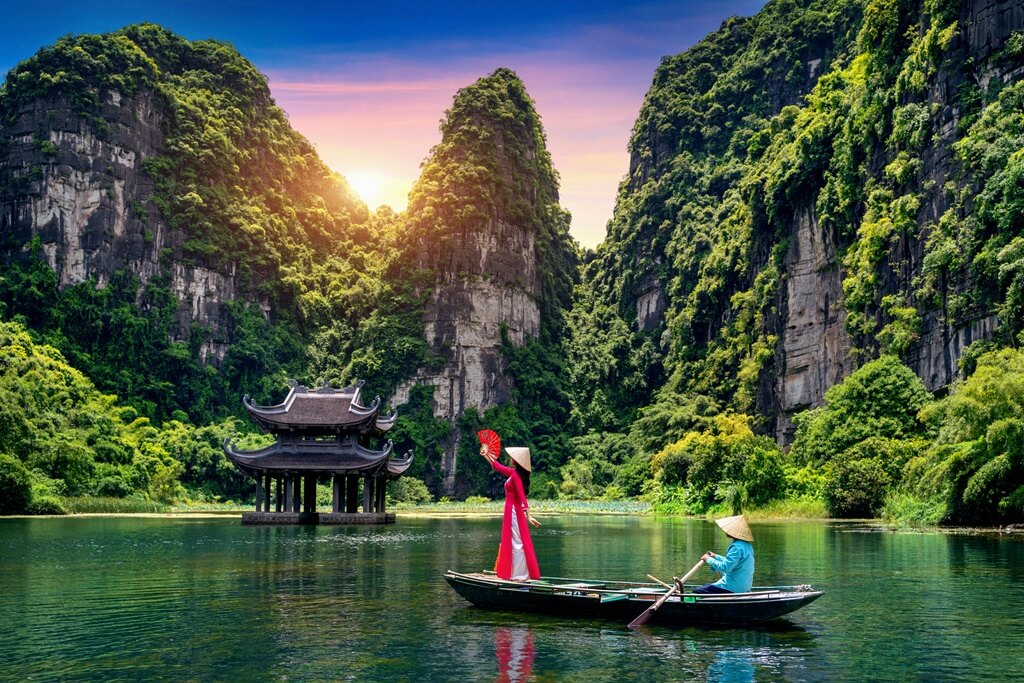
The first drops of rain pattered against the tin roof as I sipped my cà phê đá at a tiny roadside café in Ninh Binh province. Locals huddled under the awning, motorbikes parked haphazardly as the afternoon monsoon shower intensified. No one rushed. No one checked their phones. This wasn’t the Vietnam of glossy travel magazines or carefully curated Instagram feeds—this was Vietnam unfiltered, unhurried, and utterly captivating.
The Road Less Traveled
When planning my three-week journey through Vietnam, I made a conscious decision to venture beyond the well-established tourist circuit. While Hanoi’s Old Quarter, Ha Long Bay’s limestone karsts, and Ho Chi Minh City’s energy are undeniably worth experiencing, I yearned to discover the Vietnam that exists in the spaces between these landmarks.
My route would take me from north to south, but with intentional detours into rural provinces, mountain villages, and coastal communities rarely mentioned in guidebooks. What unfolded was a tapestry of experiences that revealed the country’s soul in ways I never anticipated.
Northern Whispers: Beyond Sapa
Most travelers heading to Vietnam’s northern mountains make a beeline for Sapa, with its terraced rice fields and colorful hill tribe markets. Instead, I opted for Ha Giang province, a remote region bordering China where the landscape seems torn from a traditional Vietnamese painting—jagged limestone peaks piercing through mist-shrouded valleys.
I rented a motorbike in Ha Giang city, a decision that initially terrified me but ultimately provided the freedom to explore at my own pace. The legendary Ma Pi Leng Pass offered vertigo-inducing views of the Nho Que River cutting through deep gorges. But the true magic happened in tiny villages like Lung Tam, where I was invited to join a Hmong family for dinner after helping them bring in their corn harvest.
“Many tourists want photos only,” my host Sung explained as his wife taught me to make corn wine. “Few want to understand our life.” That night, sleeping on a bamboo mat in their stilt house while rain drummed against the roof, I felt a connection to Vietnam that no luxury hotel could provide.
Central Secrets: The Coastal Road Less Taken
From Hanoi, I traveled south along coastal roads rather than taking the faster Highway 1. This route revealed fishing villages where life revolves around the rhythms of the sea. In Quynh Luu district, I stumbled upon a small temple festival where locals performed ancient dances to ensure a bountiful catch.
The central coast holds Vietnam’s most famous beaches, but venture just a few kilometers inland and you’ll find yourself in a different world. In the hills behind Hoi An, I spent two days at a small farmstay where the owner, Mr. Tran, taught me to plant rice seedlings and cook regional specialties like mì quảng (turmeric noodles with pork and shrimp).
“In Vietnam, food is not just eating,” Mr. Tran explained as we harvested herbs from his garden. “Food is family, history, and medicine.” Each meal became a lesson in cultural heritage, with dishes revealing influences from centuries of trade, conquest, and adaptation.
The Mekong’s Embrace
The Mekong Delta occupies a special place in Vietnamese identity—a water world where rivers, canals, and streams create a maze of waterways that sustain life. Rather than taking a day trip from Ho Chi Minh City, I spent a week exploring the delta’s less-visited corners.
In Tra Vinh province, home to a significant Khmer minority, I witnessed the fascinating blend of Vietnamese and Cambodian cultures. Ancient Khmer temples stood alongside Vietnamese pagodas, while markets offered dishes that fused culinary traditions. At a homestay near a small tributary of the Mekong, I joined the family’s grandmother to harvest water lilies at dawn, watching as the rising sun painted the water gold.
The floating markets remain the delta’s most famous attraction, but I found the smaller, local markets like Nga Nam (which operates only on specific days according to the lunar calendar) offered a more authentic glimpse into delta life. Here, farmers arrived in wooden boats laden with seasonal fruits, vegetables, and fish, conducting business the same way their ancestors had for generations.
Lessons from the Journey
Vietnam taught me lessons that extended far beyond travel tips:
1. Slow Down to See More
In our rush to check destinations off our bucket lists, we often miss the subtle details that reveal a place’s true character. Some of my most vivid memories came from simply sitting in local coffee shops, observing daily life unfold around me. The elderly men playing chess with bottle caps. The schoolgirls sharing a single ice cream cone. The precise, practiced movements of a street food vendor who had perfected her craft over decades.
2. Food Opens Doors
Vietnamese cuisine is rightfully celebrated worldwide, but exploring beyond the familiar dishes (phở, bánh mì, spring rolls) revealed incredible regional diversity. In each new place, I made a point of asking locals one simple question: “What food is special in your hometown?” This led me to specialties like cháo cá (fish porridge) in Nha Trang, canh chua cá (sour fish soup) in the Mekong, and thịt chó (dog meat) in the north—the latter which I politely declined but appreciated learning about its cultural significance.
3. Learn Basic Phrases
The effort to learn even a few Vietnamese phrases paid dividends in unexpected ways. Vietnamese is a tonal language that’s notoriously difficult for English speakers, but my mangled attempts at “cảm ơn” (thank you) and “xin chào” (hello) invariably produced smiles and often led to impromptu language lessons from amused locals.
4. Embrace Discomfort
Some of my most memorable experiences came from moments of discomfort—sleeping on hard beds in homestays, navigating mountain roads during sudden downpours, or trying to communicate across language barriers. These challenges pushed me beyond my comfort zone and into a space where genuine cultural exchange became possible.
The Vietnam That Remains
As my journey drew to a close, I found myself in a small fishing village near Phan Thiet, watching elderly women mend nets while children played soccer on the beach. An old man approached, curious about the foreigner sitting alone.
“You like Vietnam?” he asked in limited English.
“I love it,” I replied honestly.
He nodded, satisfied. “Vietnam very beautiful,” he said, gesturing toward the horizon where fishing boats were returning with the day’s catch. “Not just for looking. For feeling.”
That, perhaps, is the essence of traveling through Vietnam’s hidden corners—it’s a country that demands to be felt, not merely seen. Beyond the postcard-perfect views and tourist attractions lies a Vietnam of extraordinary depth and resilience, where ancient traditions coexist with rapid modernization, where strangers become family over shared meals, and where the simple act of sitting still can reveal more than any guided tour.
Three weeks wasn’t nearly enough. But it was a beginning—an introduction to a country that has claimed a permanent place in my heart, not because of its landmarks, but because of its people and the quiet moments between destinations that ultimately became the journey itself.
Vietnam doesn’t just change your travel photos. It changes you.