
There’s something humbling about standing alone in a landscape so vast it makes you feel like a speck of dust in the universe. That’s exactly how I felt on my first morning in Denali National Park, watching the alpenglow paint Mount Denali’s massive peak in shades of pink and gold while a bull moose grazed peacefully in the valley below.
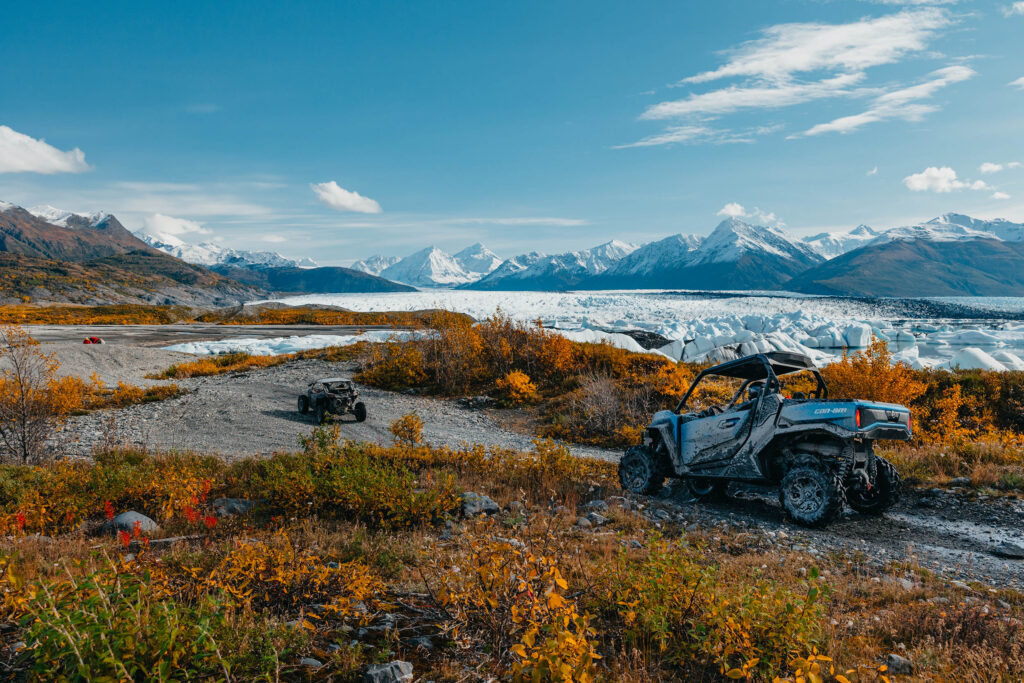
Alaska had been calling to me for years—its wild spaces, untamed wilderness, and the promise of solitude in an increasingly connected world. Last summer, I finally answered that call with a month-long solo adventure through America’s last great frontier.
The Decision to Go Solo
“You’re going alone?” This question followed me for months before my departure. Friends and family couldn’t understand why I’d choose to explore one of the most remote and potentially dangerous regions in North America by myself.
The answer was simple: I wanted to experience Alaska on its own terms, moving at my own pace, making decisions based on weather and wildlife rather than group consensus. Solo travel offers a particular kind of freedom that’s hard to find elsewhere—especially in places where nature still rules.
That said, I wasn’t reckless. I spent months researching, training, and preparing. I took wilderness first aid courses, learned bear safety protocols, and invested in proper gear. Alaska demands respect, and I was determined to give it.
Anchorage: Gateway to the Wild
My journey began in Anchorage, which serves as both a modern city and a jumping-off point for wilderness adventures. I spent two days here acclimating, gathering last-minute supplies, and visiting the excellent Alaska Native Heritage Center to better understand the indigenous cultures that have thrived in this challenging environment for thousands of years.
What struck me immediately was the quality of light—the summer sun barely setting, casting long golden hours that stretched well past midnight. This endless daylight would become both blessing and curse in the weeks ahead, offering extended hiking hours but challenging my sleep patterns.
The Kenai Peninsula: Where Mountains Meet the Sea
From Anchorage, I headed south to the Kenai Peninsula, a wonderland of glaciers, mountains, and coastline. In Seward, I boarded a small boat tour of Kenai Fjords National Park, where tidewater glaciers calve directly into the sea with thunderous cracks that echo across the water.
The marine wildlife was spectacular—humpback whales breaching beside the boat, orcas slicing through the waves, and sea otters floating lazily on their backs. But it was the glaciers that left me speechless. Standing on the deck as our captain navigated close to Aialik Glacier, I watched massive chunks of ancient ice crash into the sea, a sobering reminder of our warming planet.
Rather than rushing back to Anchorage, I spent three days hiking in the Chugach National Forest, where I encountered my first brown bear—a mother with two cubs digging for clams at low tide. Watching from a safe distance, I was struck by the perfect circle of life playing out before me: the tide revealing food, the bears teaching their young to forage, the eagles overhead waiting for scraps.
Denali: The High One
No trip to Alaska would be complete without visiting Denali National Park, home to North America’s highest peak. I splurged on a backcountry permit, allowing me to camp in designated wilderness areas accessible only by the park’s shuttle buses.
The journey into the park is an adventure itself. Private vehicles are restricted beyond the first 15 miles, so visitors must use the park’s bus system. This creates a rare experience in today’s world—a national park without traffic jams or crowded viewpoints.
I spent five days backpacking through Unit 13, setting up my tent each night with views that defied description. The tundra in summer is not the barren landscape many imagine, but rather a riot of wildflowers, berries, and miniature plants that have adapted to the harsh environment. Walking across this living carpet, I spotted Dall sheep perched on impossible cliffs, caribou migrating across valleys, and even a wolverine—one of North America’s most elusive predators.
The weather in Denali is notoriously fickle, with the mountain itself visible only about 30% of the time. I was blessed with two clear days where Denali stood revealed in all its 20,310 feet of glory. The scale is impossible to convey—photographs flatten the massive landscape into something comprehensible, but standing there, looking up at that mountain, I felt a primal awe that no image could capture.
The Interior: Following the Yukon
From Denali, I ventured further north into Alaska’s interior, following portions of the mighty Yukon River. In Fairbanks, I connected with a bush pilot who flew me into the remote community of Eagle, where the Yukon River forms part of the border with Canada.
This tiny settlement of fewer than 100 year-round residents offered a glimpse into Alaska’s gold rush history and the realities of contemporary life in the far north. I stayed at a small guesthouse run by a woman whose family had lived in Eagle for four generations. Her stories of winter temperatures reaching -50°F and the community’s self-sufficiency were as fascinating as any wildlife encounter.
From Eagle, I spent three days paddling a rented canoe down the Yukon, camping on gravel bars and falling asleep to the sound of the river. The solitude was profound—in three days, I saw more eagles than people. One evening, as I cooked dinner on a small camp stove, a wolf appeared on the opposite bank, watching me with curious yellow eyes before melting back into the forest.
The Arctic Circle: Land of the Midnight Sun
My final adventure took me above the Arctic Circle via the Dalton Highway, a 414-mile gravel road built to service the Trans-Alaska Pipeline. This remote highway is one of America’s most challenging drives, with limited services, frequent truck traffic, and weather that can change in minutes.
I joined a small tour rather than driving myself—a concession to safety that proved wise when we encountered a summer snowstorm in Atigun Pass. Our guide, a former oil field worker turned tour operator, shared insights about life in the Arctic that no guidebook could provide.
In the tiny outpost of Coldfoot, I splurged on a flightseeing tour over Gates of the Arctic National Park, one of America’s least visited national parks due to its remote location and complete lack of roads or facilities. From the air, the Brooks Range stretched endlessly, its valleys carved by ancient glaciers and dotted with crystal-clear lakes.
The highlight came when we landed on a gravel bar beside the Koyukuk River for a brief hike. Standing in a valley where likely no human had set foot that year, perhaps longer, I experienced a profound sense of wilderness that’s increasingly rare in our modern world.
Lessons from the Last Frontier
Alaska changed me in ways I’m still discovering months later. Beyond the spectacular scenery and wildlife encounters, the journey taught me valuable lessons:
- True wilderness requires humility. In Alaska, humans are not at the top of the food chain. This perspective shift is both terrifying and liberating.
- Solitude is different from loneliness. Being alone in nature connected me more deeply to myself and the world around me than any social media platform ever could.
- Preparation matters. The old adage “there’s no such thing as bad weather, only inappropriate clothing” proved true repeatedly. Having the right gear meant I could enjoy Alaska in all its moods.
- Flexibility is essential. Weather, wildlife, and road conditions demanded constant adaptation of plans. The most memorable moments often came from these unexpected changes.
- Connection happens in unexpected ways. Though traveling solo, I found meaningful connections with locals, fellow travelers, and most surprisingly, with the land itself.
Practical Tips for Your Alaska Adventure
If you’re inspired to plan your own Alaska journey, here are some hard-earned insights:
- Timing is everything. June through early September offers the most accessible experience, with July providing peak wildlife viewing but also peak crowds and prices.
- Don’t underestimate distances. Alaska is massive—larger than Texas, California, and Montana combined. Plan travel days accordingly.
- Invest in quality gear. Weather can change dramatically in minutes. Layered clothing, excellent rain gear, and proper footwear are non-negotiable.
- Learn basic wilderness skills. Understanding bear safety, river crossing techniques, and how to navigate without cell service could save your life.
- Support local businesses. From Native-owned tour companies to family-run lodges, choosing local operators enhances your experience while supporting Alaska’s communities.
- Consider shoulder seasons. Late May and early September offer fewer crowds, potential discounts, and special experiences like fall colors or spring wildlife migrations.
The Call of the Wild
As my flight lifted off from Anchorage, I pressed my face against the window for a final glimpse of the Chugach Mountains. A month had transformed Alaska from a bucket-list destination into a place that felt strangely like home—wild and challenging, but also deeply nurturing to something primal in my soul.
Alaska doesn’t just change your Instagram feed; it changes your perspective. In a world increasingly defined by convenience and constant connection, there’s profound value in places that still demand presence, patience, and respect for forces greater than ourselves.
The call of the wild still echoes in Alaska’s vast landscapes. If you listen carefully, you might hear it calling you too.