
There’s something about Kyoto that makes time slow down. Perhaps it’s the gentle sway of bamboo groves, the meditative gardens, or the centuries-old temples that have witnessed empires rise and fall. Whatever the magic, this ancient city offers a perfect antidote to our fast-paced modern lives.
First Impressions
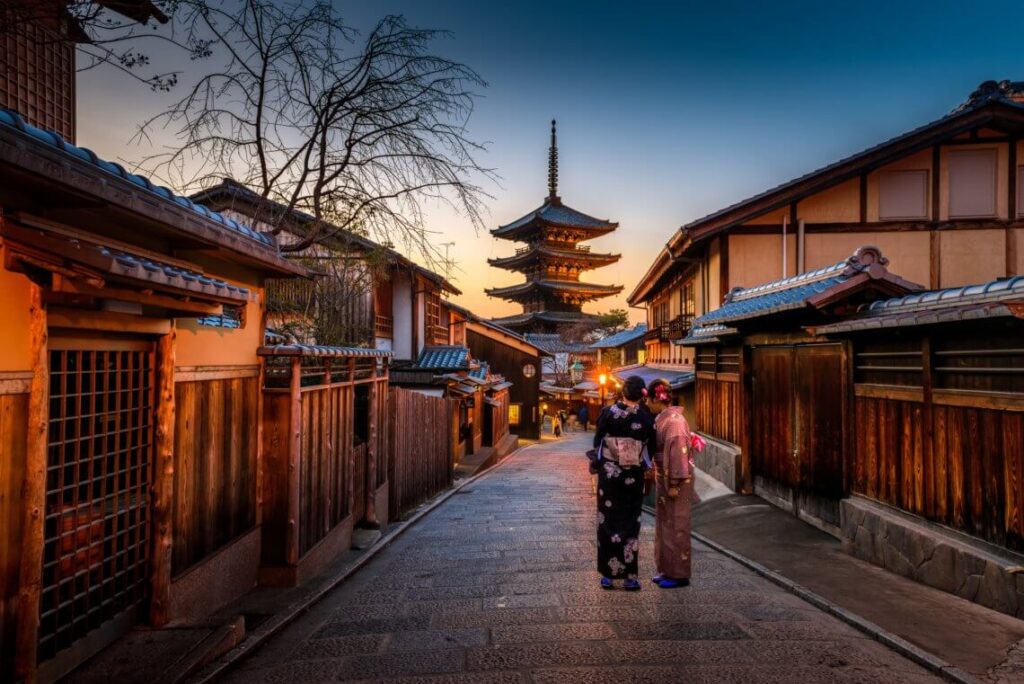
Arriving in Kyoto feels like stepping through a portal. One moment you’re in the sleek, efficient world of Japanese trains, and the next, you’re walking down narrow streets lined with wooden machiya townhouses that have stood for centuries.
Unlike Tokyo’s neon-lit skyline, Kyoto presents a more subdued beauty. The city is nestled in a valley surrounded by mountains, with the Kamo River cutting through its heart. This natural setting has shaped Kyoto’s development and preserved its character through 1,200 years of history.
Morning Temples and Gardens
I began my exploration at Kinkaku-ji, the Golden Pavilion. Arriving early is essential—by 9 AM, the site was already filling with visitors. The pavilion itself seems to float on the mirror-like pond, its gold leaf exterior shimmering in the morning light. Despite the crowds, there’s a palpable sense of tranquility here, especially as you move away from the main viewing area into the surrounding gardens.
From there, I made my way to Ryoan-ji, home to Japan’s most famous rock garden. Fifteen stones sit in a sea of meticulously raked white gravel, arranged so that at least one stone is hidden from view no matter where you sit. I spent nearly an hour on the wooden viewing platform, watching how shadows shifted across the garden and contemplating the Zen riddle before me.
The morning concluded at Arashiyama Bamboo Grove. The sound here is what captivates me most—the gentle creaking of towering bamboo stalks swaying in the breeze, creating a natural symphony. For the best experience, venture deeper into the grove where the crowds thin and the bamboo seems to stretch endlessly toward the sky.
Afternoon in Gion
After a lunch of zaru soba (cold buckwheat noodles) at a small restaurant near Nishiki Market, I wandered into Gion, Kyoto’s famous geisha district. The afternoon light cast long shadows across the wooden facades and stone streets of Hanamikoji-dori, the district’s most atmospheric lane.
Gion offers a glimpse into Japan’s traditional arts and entertainment world. Tea houses and restaurants hide behind discreet entrances, many open only to those with proper introductions. Still, the architecture alone makes a stroll worthwhile—particularly the preserved streets of Shinbashi-dori and the willow-lined canal.
As afternoon faded into evening, I was lucky enough to spot a geiko (Kyoto’s term for geisha) hurrying to an appointment, her silk kimono catching the last golden rays of sunlight. These fleeting moments feel like glimpses into another world—one that has carefully preserved its traditions despite centuries of change.
Evening Illuminations
Kyoto transforms after dark, especially when temples offer special night illuminations. Kiyomizu-dera, perched on the eastern hills, provides spectacular views over the city as lanterns and spotlights bring the temple’s wooden structure to life against the night sky.
The walk to and from Kiyomizu-dera through the Higashiyama District is equally enchanting after sunset. Traditional shops and tea houses line the narrow lanes, many staying open into the evening. The atmosphere becomes almost theatrical—stone paths lit by lanterns, the distant sound of temple bells, and the occasional glimpse of visitors in rented kimonos enjoying the evening ambiance.
Finding Hidden Kyoto
While Kyoto’s famous sites deserve their reputation, the city’s true character emerges in its lesser-known corners. I discovered this while getting deliberately lost in the backstreets of Nishijin, the traditional textile district.
Here, artisans still practice centuries-old crafts in workshops attached to their homes. I passed a small building where an elderly man was meticulously weaving silk on a traditional loom, the rhythmic clacking providing a soundtrack to the neighborhood. He noticed me watching and offered a slight nod—a moment of connection across cultures and generations.
Later, I found myself at a tiny neighborhood shrine with no other visitors. The only sounds were distant traffic, birdsong, and the soft splash of water in the purification fountain. These quiet moments of discovery became the highlights of my trip—more meaningful than checking famous temples off a list.
Practical Considerations
Kyoto rewards those who embrace its pace. Rather than rushing between sites, consider these approaches:
- Base yourself centrally: Staying near Kawaramachi or Sanjo stations puts you within walking distance of many attractions and excellent transit connections.
- Rise early: Experience popular sites like Fushimi Inari Shrine or Arashiyama Bamboo Grove before 8 AM to avoid crowds.
- Explore seasonally: Each season transforms Kyoto—cherry blossoms in spring, lush greenery in summer, fiery maples in autumn, and occasional snow in winter.
- Respect traditions: When visiting temples and shrines, observe proper etiquette—bow slightly before entering gates, avoid pointing directly at sacred objects, and speak in hushed tones.
- Embrace public transit: Kyoto’s bus network is comprehensive, and the subway connects major areas. Consider a one-day bus pass for extensive exploration.
Final Reflections
As my weekend in Kyoto drew to a close, I found myself at Philosopher’s Path—a stone walkway following a canal lined with cherry trees. Though not cherry blossom season, the path still offered a perfect space for reflection.
What makes Kyoto special isn’t just its temples or gardens, but how the city has maintained its soul despite centuries of change. In an age where destinations often sacrifice authenticity for tourism, Kyoto has found a delicate balance—welcoming visitors while preserving the cultural essence that makes it unique.
The city teaches us to slow down, to notice details, to appreciate impermanence. In our rushed modern lives, perhaps that’s the most valuable souvenir we can bring home—the art of mindful presence, of finding beauty in simplicity, of creating space for wonder.
Kyoto doesn’t reveal itself to those in a hurry. But for travelers willing to slow their pace and open their senses, Japan’s ancient capital offers lessons that resonate long after the journey ends.